
MOTION CONTROL
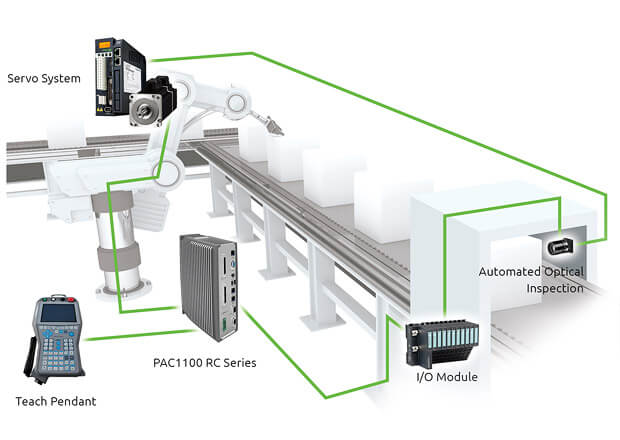

Motion control is an essential component in the field of industrial automation, allowing for precise and dynamic control of the movements of actuators and mechanical devices. This field is crucial across a wide range of sectors, from manufacturing to robotics and semiconductor production. Let’s explore the meaning, applications, and recent developments in the world of motion control.
Definition of Motion Control
Motion control refers to the process of regulating the movement of a mechanical system using electronic and algorithmic technologies. This control can involve speed, acceleration, position, and other movement parameters. Motion control is widely used to enhance the precision, speed, and efficiency of industrial machines.
Applications of Motion Control
Industrial Robotics: In the field of robotics, motion control allows robots to perform precise, coordinated, and synchronized movements. This is crucial in applications such as assembly, welding, picking, and packing.
CNC Machines: In CNC machines, motion control manages the movements of the machine’s axes to precisely shape the work material. This is fundamental in sectors like metalworking and component manufacturing.
Industrial Automation: In automation systems, motion control manages the movement of conveyors, belts, and other mechanical devices. This optimizes production, reduces errors, and improves safety.
Positioning Systems: In applications requiring precise positioning, such as the packaging industry, motion control is essential to ensure accurate placement and optimal material distribution.
Key Components of Motion Control
Actuators: Electric motors, linear motors, and other devices that convert electrical energy into mechanical movement.
Sensors: Encoders, position sensors, and other feedback devices that provide information on the system’s status.
Controller: A control system that processes information from sensors and sends commands to actuators to regulate movement.
Software: Control algorithms and dedicated software for programming and optimizing the behavior of the motion control system.
Recent Developments and Trends
Artificial Intelligence (AI): Integrating AI techniques into motion control is leading to more adaptable systems capable of machine learning.
Network Communication: The use of advanced network communication protocols enables greater integration between motion control devices and other automated systems.
Robustness and Safety: Designing more robust and secure motion control systems is a growing priority, especially in critical industrial applications.
Advanced Power Electronics: Advances in power electronics technologies enable more efficient and precise control of electric motors, reducing energy dissipation and improving efficiency.
The Future of Motion Control
Motion control will continue to play a crucial role in the evolution of industrial automation. Greater integration with emerging technologies such as the Internet of Things (IoT) and collaborative robotics is expected, contributing to making production systems more flexible, efficient, and connected. In conclusion, motion control is a key element transforming how industrial machines move and interact with their surroundings. Its continuous evolution will help redefine the landscape of industrial automation in the coming years.
